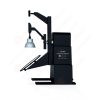
LM-79 Beweglicher Detektor Goniophotometer (Spiegel Typ C)
LSG-6000
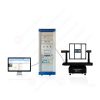
Hochpräzises Drehleuchten-Goniophotometer
LSG-1890B
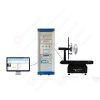
Hochpräzises Rotationsleuchten-Goniospektralradiometer
LSG-1890BCCD

Goniophotometer für Kfz- und Signallampen
LSG-1950
Goniophotometer für Ampeln
LSG-1950S
VAD-Feueralarm-Sichtwarngerät Goniophotometer
LSG-1930
Kompaktes Goniophotometer
LSG-1200A
LED-Goniophotometer
LSG-1100
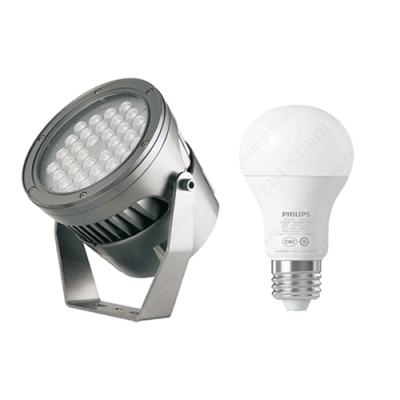 LED- und Leuchtentestlösungen
 LM-79 und LM-80 Testlösungen
 LED-Treiber-Testlösungen
 Testlösungen für Haushaltsgeräte
 Mobil- und Netzwerktestlösungen
 Prüflösungen für die Automobilelektronik
 Audio-Video- und IT-Testlösungen
 Kabel- und Kabeltestlösungen
 Testlösungen für Stecker und Buchsen
 Lösungen zum Testen von Netzschaltern
 Transformator-Testlösungen
 Testlösungen für elektrisches Spielzeug
 Testlösungen für Energiezähler
 Motorbetriebene Werkzeugtestlösungen
Wählen Sie eine Organisation aus
Standards durchsuchen
Abstract
For LED drivers and various lighting luminaires exported to the EU market, the CE‑EMC directive mandates two critical tests: harmonic current emission, voltage fluctuation and flicker. The corresponding standards are GB 17625.1 (identical to IEC 61000‑3‑2) and GB 17625.2 (identical to IEC 61000‑3‑3). Without standardized and high‑precision Harmonics and Flicker Analyzer for pre‑compliance and type tests, products may face risks such as customs detention, non‑conformity in market sampling inspection and invalid certification reports. Taking the LISUN LSHF61000‑3‑2/3 Harmonics and Flicker Analyzer test system as the core research object , this paper fully analyzes the hardware composition, core technical parameters and standard adaptability of the complete test equipment. It sorts out standardized test procedures for LED drivers and indoor‑outdoor luminaires, and demonstrates the compliance advantages of the system through hardware parameter comparison table. It provides a complete implementation reference for lighting enterprises and third‑party testing laboratories to build standardized harmonics and flicker test platforms.
In the EU CE certification system, electromagnetic compatibility is a mandatory market‑access requirement for lighting products. Low‑frequency power quality tests cover harmonic current emission, voltage fluctuation and flicker. Lighting equipment is classified as Class C equipment under IEC 61000‑3‑2 with dedicated harmonic limit requirements. Dimmable LED luminaires are exposed to flicker non‑compliance risks caused by dynamic load changes. Ordinary desktop power analyzers cannot reproduce the reference grid impedance and pure undistorted AC supply specified by standards, so their test data cannot be accepted for certification. If enterprises adopt simple instruments for self‑testing, large deviations will occur between pre‑test results and data from third‑party laboratories, leading to longer R&D rectification cycles and repeated certification costs.
Das LISUN LSHF61000‑3‑2/3 Harmonics and Flicker Analyzer test system is a certification‑grade complete EMC solution developed for single‑phase low‑power electrical devices. The full set consists of three professionally matched instruments: LSHF61000‑3‑2/3 Harmonics and Flicker Analyzer, LSAIF‑503 flicker impedance network and LSP‑1KVAC‑HF low‑distortion AC power source. Its hardware architecture, measurement algorithm and supporting software fully comply with all technical clauses of GB 17625.1 and GB 17625.2. It can complete full harmonics and flicker tests for LED drivers, panel lights, floodlights and smart dimmable luminaires in one workflow, and output raw test curves and Pass/Fail evaluation reports available for CE certification application. It is applicable to R&D laboratories, quality‑control workshops and third‑party testing institutions in the lighting industry.
A complete harmonics and flicker test chain must include a pure power supply unit, standard simulated grid impedance unit and high‑precision measurement‑analysis unit. None of the three can be omitted. Non‑conformity of any hardware component will directly cause distorted test results. The LISUN LSHF61000‑3‑2/3 Harmonics and Flicker Analyzer test system adopts an integrated complete‑set design. The three instruments are calibrated for inter‑working at factory, so users do not need to adjust timing synchronization among impedance network, power source and analyzer manually. It meets measurement constraints of national standards and IEC international standards at hardware level.
The core device is LSHF61000‑3‑2/3 Harmonics and Flicker Analyzer, acting as data acquisition and calculation core of the whole system. It meets Class 1 accuracy requirements for harmonic measuring instruments specified in GB 17625.1. Built‑in preset programs can automatically classify DUT into Category A/B/C/D, and call dedicated harmonic limits for Category C lighting products. It calculates 0‑50 individual harmonic currents, total harmonic distortion THDI, power factor, POHC and other key indicators synchronously. The flicker measurement module strictly follows calculation rules of GB 17625.2, automatically computes dt, dc, dmax, Tmax, short‑term flicker Pst and long‑term flicker Plt, and outputs Pass/Fail judgment by comparing standard limits without manual conversion.
The second supporting unit is LSAIF‑503 flicker impedance network, a critical component to reproduce characteristics of public low‑voltage grid. Standard defines line impedance 0.24 Ω + j0.15 Ω for live wire and 0.16 Ω + j0.10 Ω for neutral wire. The impedance network supports maximum continuous current of 16 A, fully matching input current range of luminaires and LED drivers. Without this impedance network, real‑world grid load fluctuation cannot be simulated. Measured Pst and Plt values may deviate by more than 30 %, and test reports will not be accepted by certification bodies.
The third supporting instrument is LSP‑1KVAC‑HF low‑distortion AC power source, serving as standard power supply for LED luminaires and drivers. It delivers ultra‑low‑distortion output waveforms, adjustable voltage from 0 to 300 V and tunable frequency ranging from 45 Hz to 65 Hz. It can simulate 230 V/50 Hz standard grid conditions of EU countries, and eliminate interference brought by harmonics and voltage fluctuation of utility mains. Therefore, electric signals collected by Harmonics and Flicker Analyzer originate only from the device under test, and measurement errors from external power grid are eliminated.
Table 1 Hardware Parameters and National Standard Compliance Requirements of LISUN LSHF61000‑3‑2/3 Harmonics and Flicker Analyzer System
| Einheit | Wichtige technische Daten | Requirements of GB 17625.1 (IEC 61000‑3‑2) | Requirements of GB 17625.2 (IEC 61000‑3‑3) | Adaptation for Lighting Tests |
|---|---|---|---|---|
| LSHF61000‑3‑2/3 Harmonics and Flicker Analyzer | Voltage:1.000~600.00V, accuracy ±0.05%FS ±0.05%Reading; Current:2.0mA~13.300A; Frequency:45~65Hz; Class 1 harmonic analyzer, flickermeter accuracy better than 5% | Harmonic measuring instrument shall reach Class 1 accuracy, support separate statistics for 0‑50 harmonic components | Flickermeter measurement error shall not exceed 5 %, automatic Pst / Plt limit comparison | Covers LED drivers and luminaires from 5 W to 1000 W, suitable for low‑power light strips and high‑power floodlights |
| LSAIF‑503 flicker impedance network | Live wire:0.24Ω+j0.15Ω, neutral wire:0.16Ω+j0.10Ω, max continuous current 16 A | No mandatory impedance requirement, but harmonic test shall match standard AC power source | Specified reference impedance shall be adopted to simulate public low‑voltage grid | Mandatory accessory for CE flicker test of all single‑phase lighting products; reports without impedance network are invalid for certification |
| LSP‑1KVAC‑HF low‑distortion AC power source | 1 kVA capacity, output 0~300 V, rated current 4.2 A at 220 V, low‑distortion waveform | Self‑harmonics of test power source shall be far below DUT limits without extra interference | Power‑supply voltage fluctuation shall be kept within standard allowable range | Simulate EU 230 V nominal grid; support variable voltage test for wide‑voltage drivers |
As shown in parameter comparison, every instrument of the complete Harmonics and Flicker Analyzer system satisfies all mandatory clauses of the two standards. Purchasing only a single analyzer or ordinary frequency‑conversion power source cannot establish a full compliant test chain, which will result in missing hardware indicators and excessive measurement errors. Only the complete matched LISUN test system can be directly applied for type tests of lighting products.
Pre‑compliance test or type test for lighting products using LISUN LSHF61000‑3‑2/3 Harmonics and Flicker Analyzer includes five major steps: sample pre‑treatment, system wiring and debugging, steady‑state harmonic test, dynamic flicker test, data storage and report export. Built‑in standard programs run automatically to reduce manual‑operation‑caused data deviation.
The first step is sample pre‑treatment and working‑condition setting. Assemble LED light sources and matching loads according to practical application status. For dimmable luminaires, prepare tests under 100 %, 50 % and 10 % deep‑dimming brightness levels. Prepare at least three parallel samples for each DUT. Record rated power, input voltage and product category (Category C lighting equipment) as basic test archive information.
The second step is wiring and debugging of the complete Harmonics and Flicker Analyzer system. Connect output of LSP‑1KVAC‑HF AC power source to input terminal of LSAIF‑503 flicker impedance network. Connect output of impedance network to LED driver or luminaire under test. Link voltage and current acquisition terminals of impedance network to LSHF61000‑3‑2/3 Harmonics and Flicker Analyzer. Launch supporting PC software, verify system communication. Set supply voltage at 230 V and frequency at 50 Hz. Confirm timing synchronization among impedance network, power source and analyzer, and verify real‑time Urms and Irms readings on software interface.
The third step is steady‑state harmonic test in accordance with IEC 61000‑3‑2. Call Category C lighting equipment standard program in Harmonics and Flicker Analyzer software. Keep DUT running for 30 minutes under full load to reach thermal stability before starting acquisition. The instrument automatically records 0‑50 harmonic current values, total harmonic distortion THDI, power factor PF, POHC and other parameters. Software judges Pass/Fail against dedicated harmonic limits for Category C luminaires, and marks out‑of‑limit items for 3rd, 5th and 7th harmonics which are sensitive for lighting products, helping R&D engineers locate defects of PFC and filter circuits.
The fourth step is dynamic flicker test according to IEC 61000‑3‑3. Enable long‑term flicker acquisition mode for dimmable luminaires and periodically switched devices. Set test duration to full 2 hours to obtain Plt long‑term flicker index. Harmonics and Flicker Analyzer continuously records voltage fluctuation curves and dt/dc/dmax values, and automatically verifies whether short‑term flicker Pst ≤1.0 and long‑term flicker Plt ≤0.65 are satisfied. For non‑dimmable luminaires with fixed brightness, test period can be shortened to 10 minutes for Pst measurement only to improve testing efficiency.
The fifth step is data storage and CE‑oriented report export. After test completion, supporting software of Harmonics and Flicker Analyzer can export raw waveform diagrams, harmonic value tables and flicker trend curves in one click. Files contain full traceable information including instrument model LSHF61000‑3‑2/3, standard number, sample information and test timestamp. Third‑party certification bodies can directly adopt these datasets for issuing CE‑EMC certificates without repeated retests.
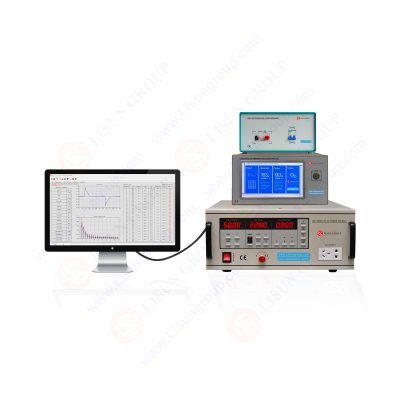
LSHF61000-3 Harmonics and Flicker Analyzer
Two major non‑conformities frequently occur during CE tests for LED drivers and luminaires: excessive harmonic current and over‑limit Pst flicker value. LISUN LSHF61000‑3‑2/3 Harmonics and Flicker Analyzer can accurately locate root causes and provide quantitative data support for R&D rectification.
For harmonic non‑compliance, most low‑power LED drivers are not equipped with active PFC circuits, leading to 3rd‑order and 5th‑order harmonic currents exceeding Category C limits. Harmonics and Flicker Analyzer can export bar charts for each harmonic component, showing out‑of‑limit harmonic orders and current amplitudes intuitively. R&D engineers can adjust input filter and PFC control schemes based on measured data. Deep‑dimming scenarios bring higher harmonic distortion under low brightness. The instrument supports segmented data storage under multiple brightness levels, so engineers can compare harmonic variations at different dimming levels and optimize control logic of dimmable drivers.
For flicker non‑compliance, smart‑dimming and switch‑segment luminaires generate instantaneous load‑current transients and trigger voltage fluctuation under standard impedance network. Conventional analyzers only output final Pst values and cannot capture transient fluctuation events. This Harmonics and Flicker Analyzer records full‑time voltage variation curves, locates switch‑ or dimming‑related events causing flicker overrun, and guides engineers to optimize constant‑output circuits and add buffer circuits to suppress current surges, so as to eliminate flicker non‑conformity at source.
The complete system also supports batch incoming inspection on production lines. QC operators can directly invoke built‑in standard routines without mastering complex standard texts. Full harmonics‑and‑flicker evaluation runs automatically once samples are connected. Unqualified driver semi‑finished products can be screened rapidly, avoiding EMC defects discovered after final assembly and reducing production losses.
For LED drivers and lighting luminaires exported to EU, the prerequisite for CE certification compliance is deploying a fully‑matched Harmonics and Flicker Analyzer test platform. Single measuring instrument cannot reproduce supply, impedance and measurement conditions defined by GB 17625.1 and GB 17625.2. LISUN LSHF61000‑3‑2/3 Harmonics and Flicker Analyzer test system integrates harmonic analysis unit, standard impedance network and low‑distortion pure AC power source. Its hardware fully meets requirements of national standards and corresponding IEC standards. Pre‑installed dedicated test routines for Category C lighting devices enable one‑stop execution of steady‑state harmonic and dynamic flicker tests, delivering raw datasets and evaluation reports acceptable for certification purposes.
For lighting R&D enterprises, production QC workshops and third‑party testing laboratories, deploying this Harmonics and Flicker Analyzer supports early‑stage pre‑compliance rectification, mitigates non‑conformity risks in export sampling and CE certification procedures, accelerates new‑product launch cycles, and cuts extra costs from repeated third‑party laboratory tests. It serves as a standardized test solution for market access of LED lighting products in European Union.
Tags:LSHF61000-3-2/3Deine Email-Adresse wird nicht veröffentlicht. Erforderliche Felder sind markiert *

 Englisch
 中文简体
中文简体 Русский
 Español
 Português
 Türkçe
 العربية
 Deutsch
 Polski
 Italiano
 Français
 한국어
한국어 ไทย
ไทย Tiếng Việt
 日本語
日本語